My blog

Authorized regional partner for select SVANTEK products
Class 1 Sound & Vibration Meter SV 977D Product Page
Sound Level Meters > SV 977D
Noise Dosimeter

Class 1 Sound and Vibration Level Meter SV 977D

5.0 (20 Reviews)
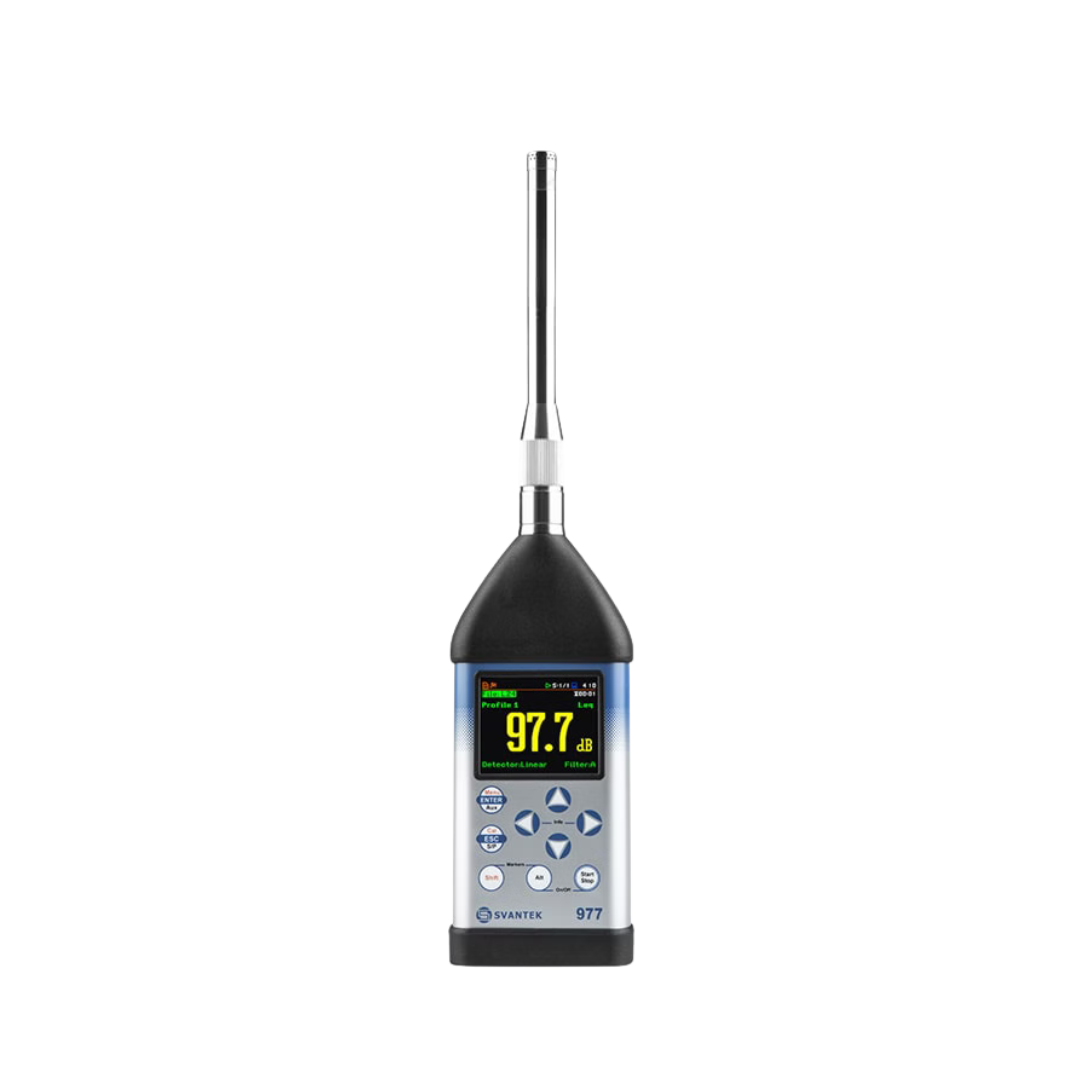
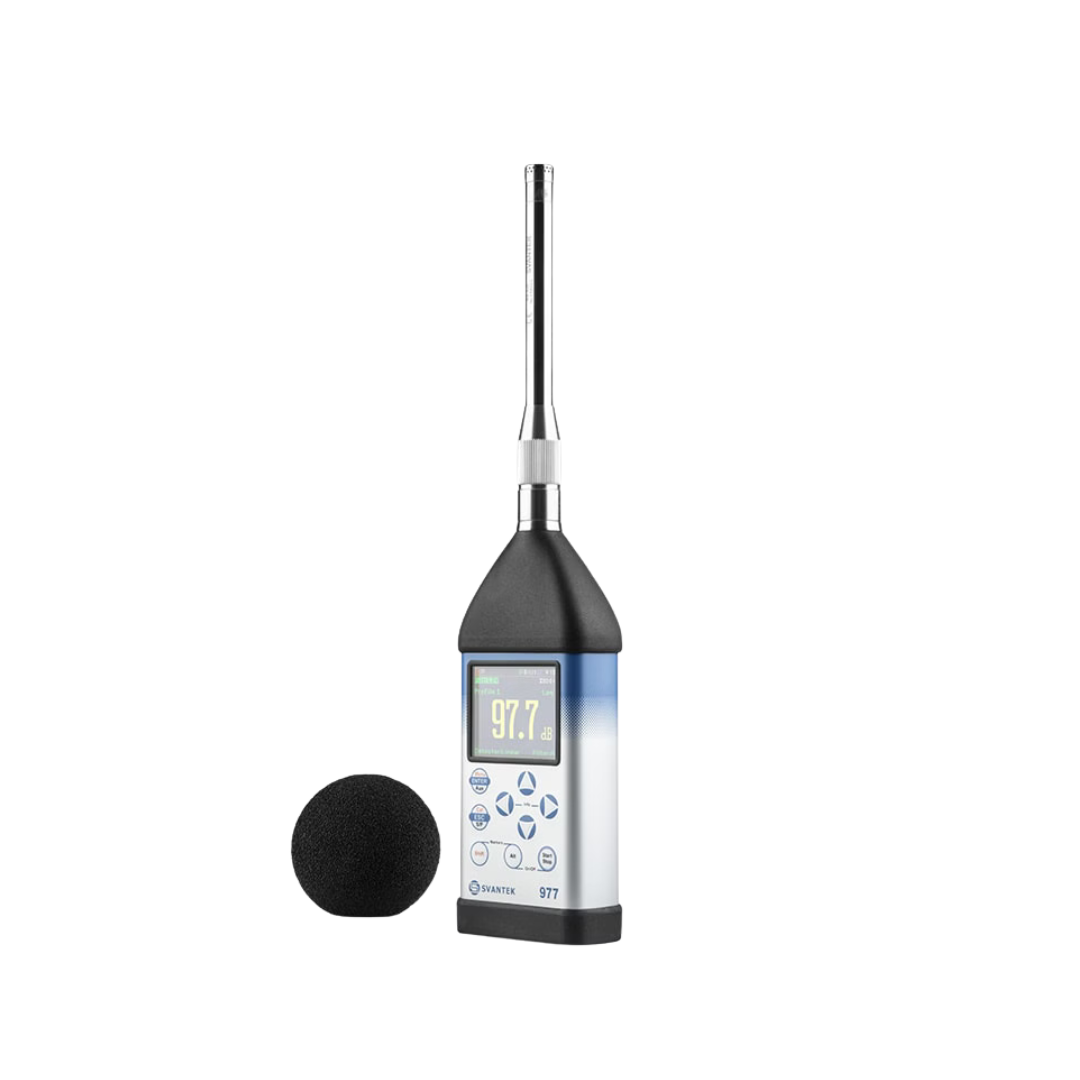
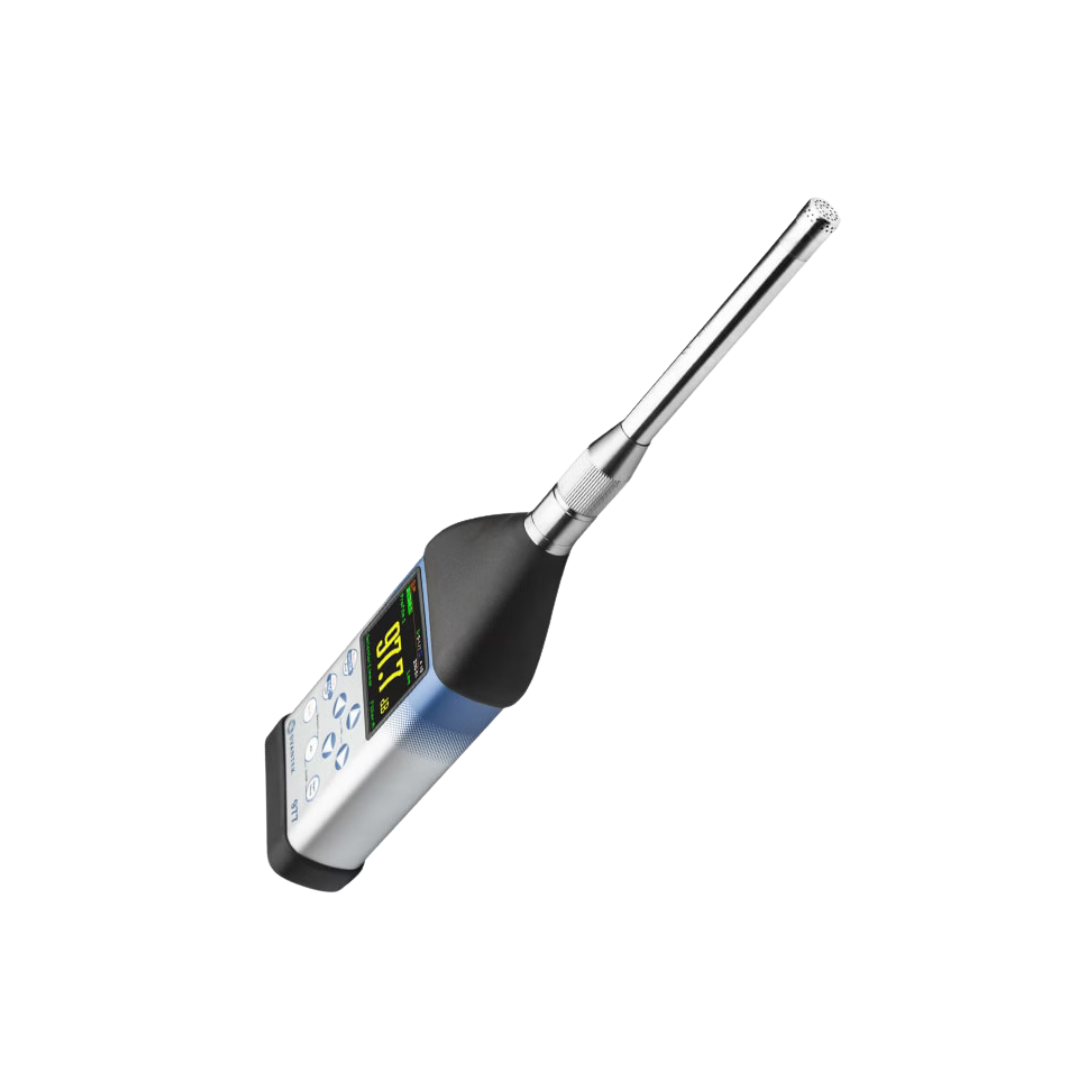
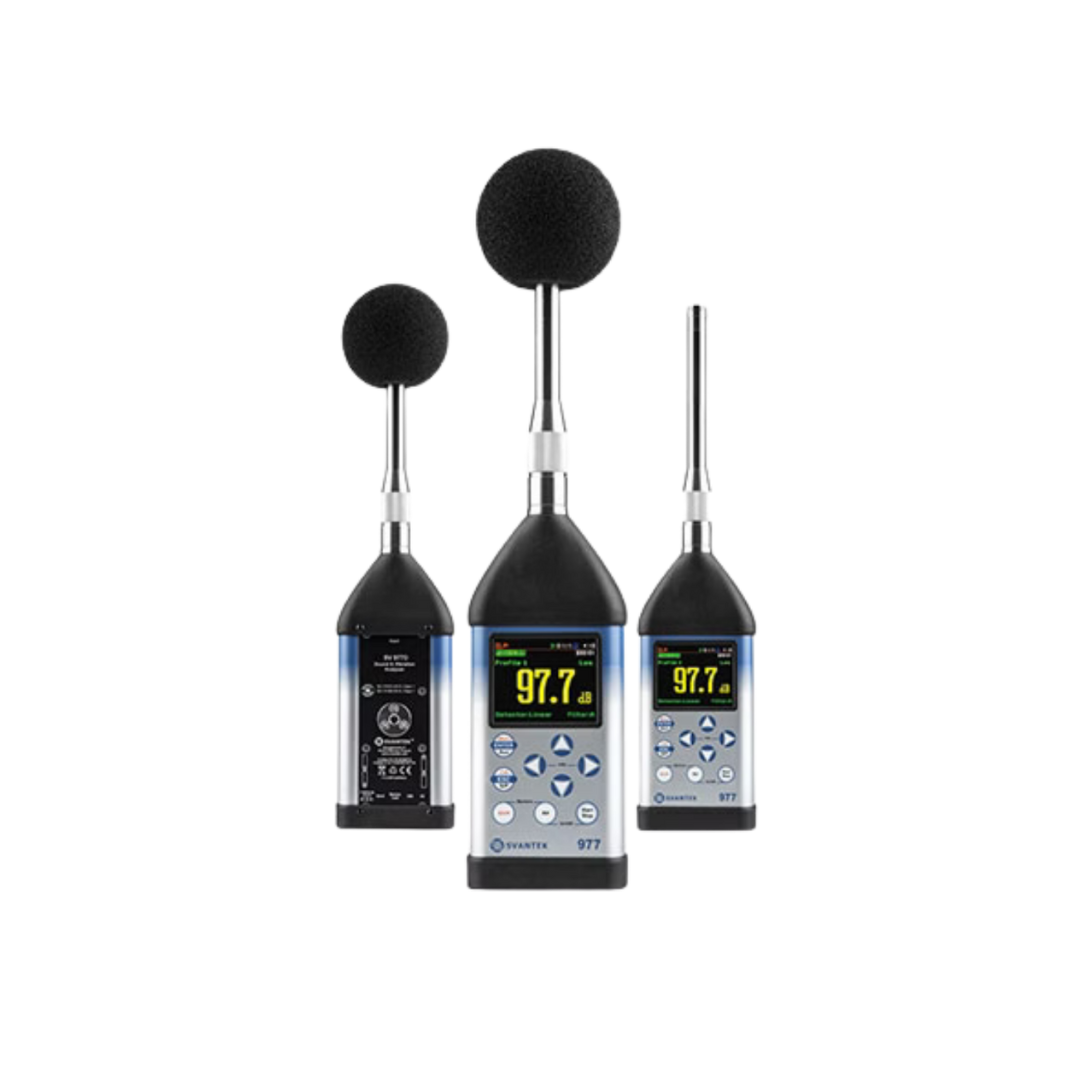
The SV 977D is a precision Class 1 Sound and Vibration Level Meter engineered for comprehensive acoustic and vibration measurements in building acoustics, occupational noise, and environmental applications. It features a ½” MK 255 microphone offering a wide frequency response from 3 Hz to 20 kHz with excellent long-term stability. The instrument also supports extended frequency analysis up to 40 kHz, making it ideal for... both industrial and medical ultrasonic monitoring. With a total dynamic range from 16 dBA RMS to 140 dBA Peak and a linear operating range from 23 dBA RMS to 140 dBA Peak (as defined by IEC 61672-1), the SV 977D ensures precise and compliant performance across all measurement conditions. Fully type-approved to IEC 61672-1 Class 1, it combines advanced functionality with user convenience.
Inquire Now

The SVAN 977D is a versatile Class 1 sound and vibration analyzer designed for advanced acoustic, environmental, and machine vibration measurements. It supports high-resolution frequency analysis, time-history logging, and optional vibration diagnostics in a single instrument.

With wide frequency coverage, modular measurement options, and wireless communication, the SVAN 977D is suited for demanding field and laboratory applications requiring comprehensive sound and vibration analysis.


Sound measurements features
Sound measurements✔️
Occupational noise✔️
Building acoustics✔️
Machine vibration✔️
Number of channels1
Auto-calibration✔️
Remote communication✔️
Bluetooth✔️
GPS module✔️
Communication interfacesUSB-C, I/O, RS232, Bluetooth 5.2
Display✔️
Keyboard9 keys
MemoryUSD 32 GB
Battery typeAA
Operating time12–16 hours
Operating temperature range-10 °C to 50 °C
Humidity rangeup to 90 % RH, non-condensed
Weight600 grams
Size343 × 79 × 39 mm
StandardsClass 1: IEC 61672-1:2013
Class 1: IEC 61260-1:2014
Type approvalsPattern approvals to IEC 61672 and WELMEC requirements
Microphone typeMicrotech Gefell MK 255
Preamplifier typeSV 12L
Linear operating range to IEC 6167223 dBA Leq ÷ 140 dBA Peak
Total measurement range16 dBA Leq ÷ 140 dBA Peak
Internal noise< 16 dB LAeq
Frequency range3 Hz ÷ 20 kHz
Weighting filtersA, B, C, Z, LF, U, AU
Time constantsSlow, Fast, Impulse
Profiles per channel3
Min logging step2 ms
StatisticsLn (L1–L99)
Statistics in octaves or third octaves✔️
Audio recordingOption
1/1 octave✔️
1/3 octave✔️
FFTOption
RT60Option
STIPAOption
RPMOption
StandardsISO 20816
Number of channels1
Sensor typeIEPE
1/1 octave✔️
1/3 octave✔️
WAV recordingOption
FFTOption
RPMOption

Other Features & Highlights

  • ISO 16283 – Defines methods for measuring airborne and impact sound insulation in buildings.
  • IEC 61672-1 – Specifies Class 1 sound level meter standards for accurate acoustic measurements.
  • IEC 61260 – Defines requirements for Class 1 octave and one-third octave filters.
  • ISO 3382-2 – Standard governing reverberation time measurements in rooms.
  • IEC 60942 – Specifies criteria for Class 1 sound calibrators used for verification before and after measurements.
  • ISO 10140 – Defines the operation of impact tapping machines used in floor sound insulation testing.
  • Equipment and procedures compliant with ISO and IEC standards – Ensures instruments meet Class 1 accuracy and verification protocols.
  • Accredited laboratory verification required – Calibration recommended annually to maintain accuracy.
  • BA Assistant App – Guides users through ISO 16283-compliant measurement and reporting.
  • Omnidirectional sound source – Essential for reliable airborne sound insulation and reverberation analysis.
  • Impact hammer or rubber ball method – Used depending on the building structure type for impact sound testing.

Related Products

Applications & Use Cases

The SVAN 977D is a versatile sound and vibration analyzer built for complex acoustic and environmental measurement tasks. It supports advanced noise monitoring, building acoustics, and long-term outdoor measurements

Occupational Noise

Occupational Noise

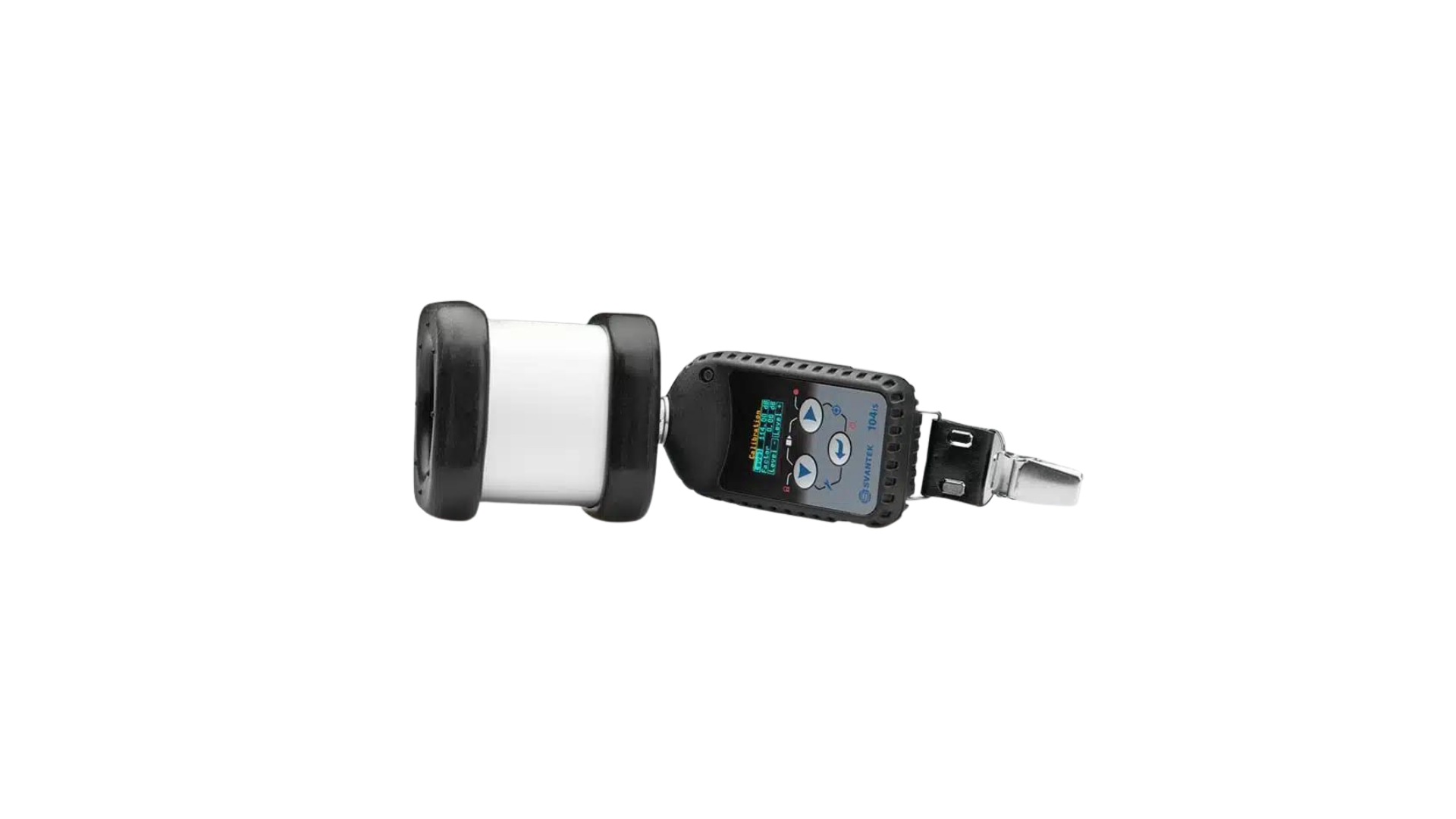
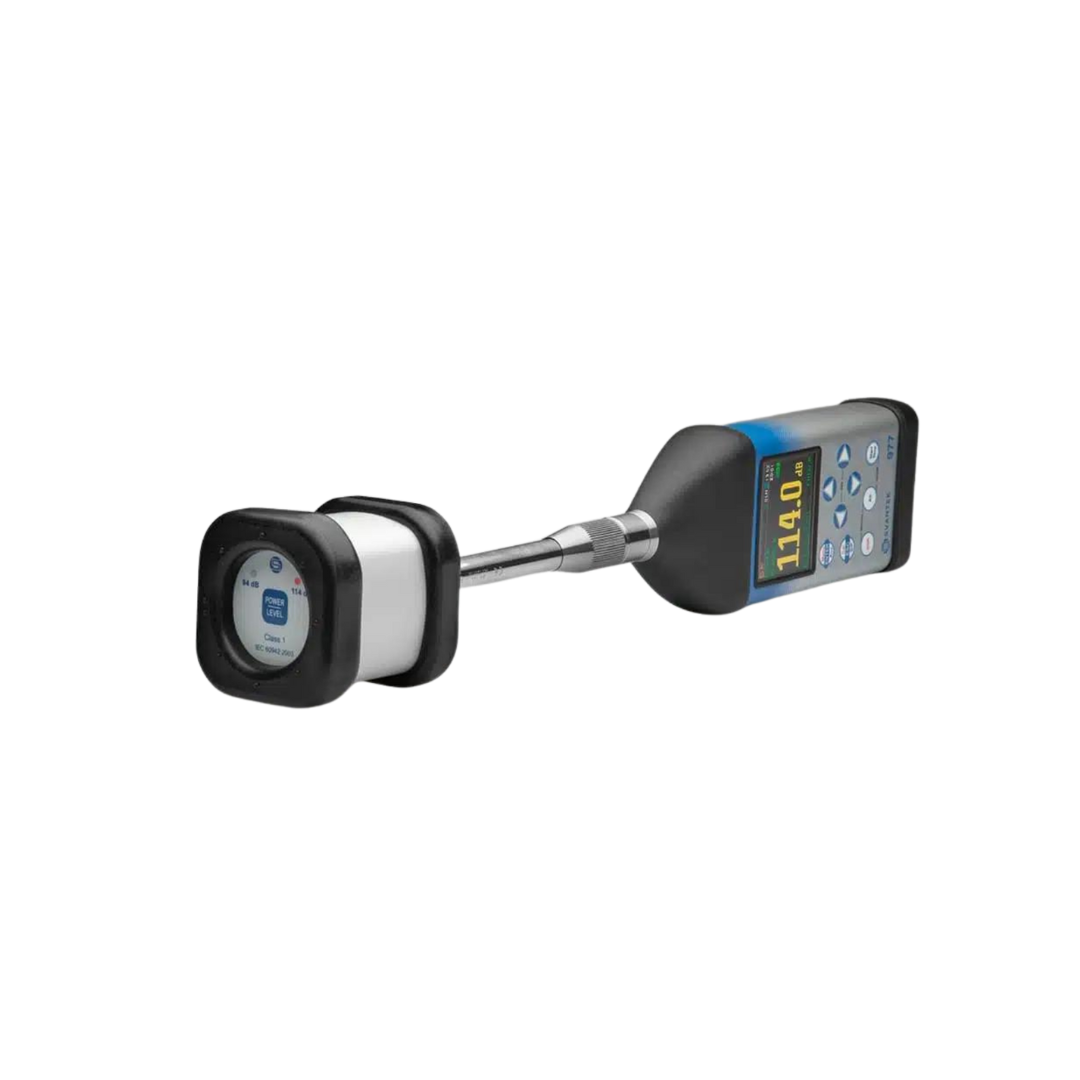
Calibration of Class 2 sound level meters and noise dosimeters

An acoustic calibrator generates a defined acoustic pressure level and frequency, serving as a reference standard for verifying measurement accuracy. This reference signal allows users to assess and, if necessary, adjust the accuracy of Class 2 sound level meters and noise dosimeters, ensuring precise and compliant occupational noise measurements.

Inteccon - Features

Key Features

The SV 977D is a Class 1 sound and vibration analyzer designed for advanced acoustic and ultrasound measurements. It combines high-frequency analysis, precise compliance, and wireless connectivity for demanding professional use.

Advanced Octave Band Analysis

Real-time 1/1 and 1/3 octave frequency analysis enables precise sound and noise evaluation across applications.

High-Frequency & Ultrasound Measurement

Supports sound and ultrasound measurements up to 40 kHz, expanding analysis beyond standard audible ranges.

WAV Recording & Post-Processing

Integrated WAV recording with SvanPC++ software support enables detailed post-processing and acoustic diagnostics.

Class 1 Standards Compliance

IEC 61672-1:2013 Class 1 compliant for high-accuracy acoustic measurements in professional and regulatory use.

Wide Dynamic Range Performance

Reliable operation from 23 dBA to 140 dBA ensures accurate results across low-noise and high-level environments.

Wireless Remote Communication

Bluetooth® connectivity enables real-time monitoring, spectral viewing, and data access via mobile applications.

FAQ Component

Frequently asked questions

What is a sound level meter?

A sound level meter (SLM) is a hand-held instrument that measures sound pressure levels (SPL) in decibels, responding to sound much like the human ear.

What is a sound level meter used for?

It’s used to measure and manage noise from factories, construction sites, vehicles, concerts, and workplaces to ensure safety and environmental compliance.

What are Class 1 and Class 2 sound level meters?

Class 1 meters are more precise and suited for laboratory and environmental monitoring, while Class 2 meters are used for general-purpose or workplace noise assessments.

How does a sound level meter work?

It uses a microphone to convert sound into an electrical signal, processes it with filters and time settings, and displays the measured sound level in decibels (dB).

What is Leq (Equivalent Continuous Sound Level)?

Leq represents the average sound energy over a period, giving a single value that reflects fluctuating noise levels.

How often should I calibrate a sound level meter?

You should check calibration before and after each measurement session and send it to a certified lab every 12–24 months for verification.

How do I perform a field calibration?

Place the calibrator snugly over the microphone, switch it on (usually 94 dB or 114 dB at 1 kHz), and adjust or verify the reading on the meter.

What standards apply to sound level meters?

SLMs are tested and certified under IEC 61672 standards for accuracy and functionality, with Class 1 and Class 2 performance levels.

What is the measurement range of the SV 977D?

It measures from 16 dBA RMS to 140 dBA Peak, with a wide frequency range from 3 Hz to 20 kHz, extendable up to 40 kHz for ultrasonic applications.

What features make the SV 977D versatile?

The SV 977D includes Bluetooth® communication, 1/1 and 1/3 octave analysis, audio recording, and real-time vibration measurement, all supported by the Supervisor software suite.

How is data stored and accessed?

The device records measurement data on an SD card, which can be analyzed later using PC software for reporting, octave analysis, and vibration evaluation.

What standards does the SV 977D comply with?

It fully complies with IEC 61672-1 Class 1 for sound level meters and ISO 16283, ISO 3382-2, and ISO 10140 for building acoustics, ensuring precision in professional measurements.

We'd Love to Hear From You

Please fill out the form below to get in touch.

Serving customers in Florida, Maryland, Delaware, New Jersey, New York, Connecticut, Rhode Island, Massachusetts, Vermont, New Hampshire & Maine. Local technical support for SVANTEK instruments.