
SVANTEK sound level meters deliver accurate acoustic measurements for occupational, environmental, and building applications.
Inquire Now


SVANTEK sound level meters are trusted worldwide for compliance-grade noise assessment and advanced acoustic analysis. From workplace noise surveys to building acoustics and environmental monitoring, these instruments support confident decision-making.
Class 2 sound level meter for occupational noise, building acoustics, and STIPA measurements.
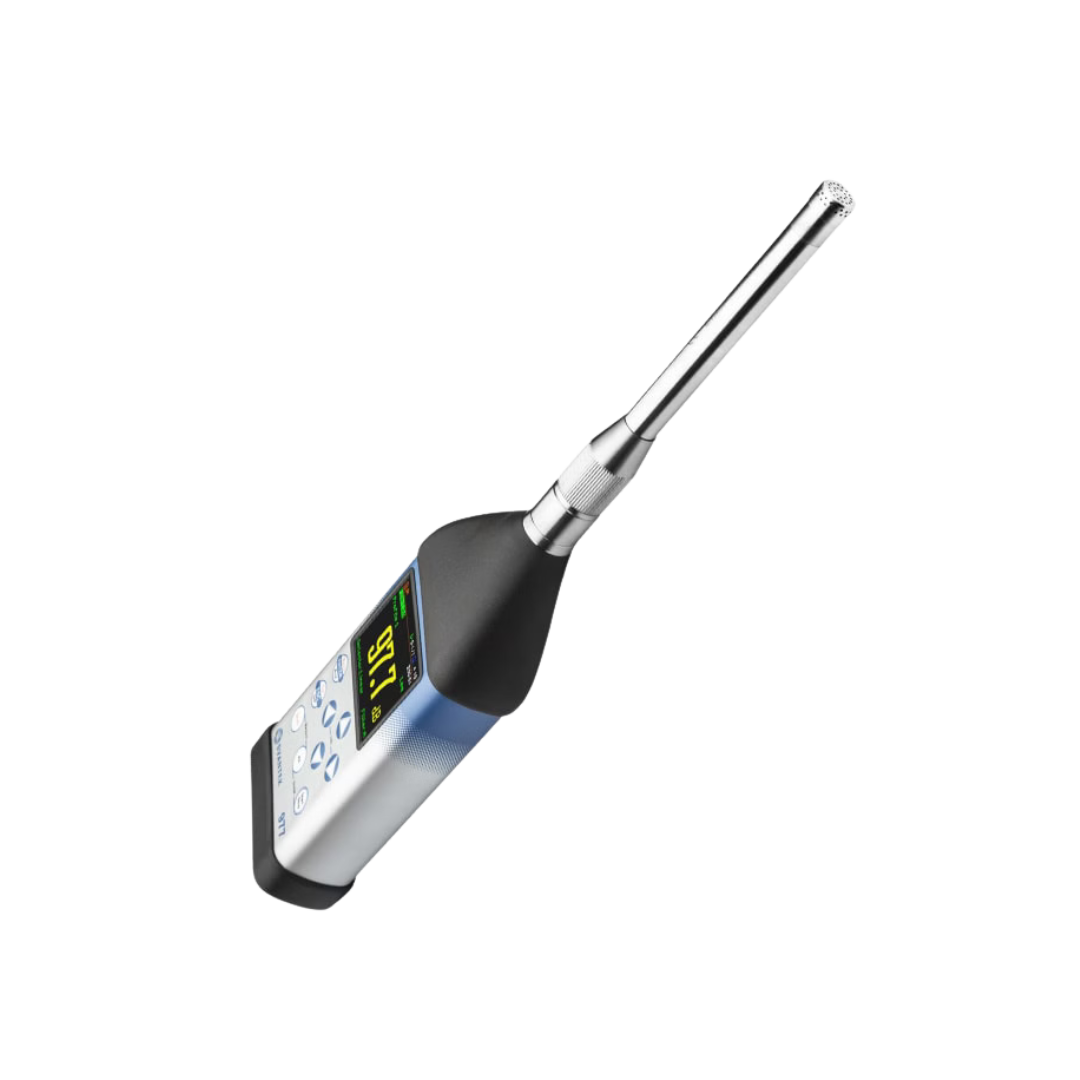
High-precision Class 1 sound level meter for regulatory, environmental, and acoustic compliance.
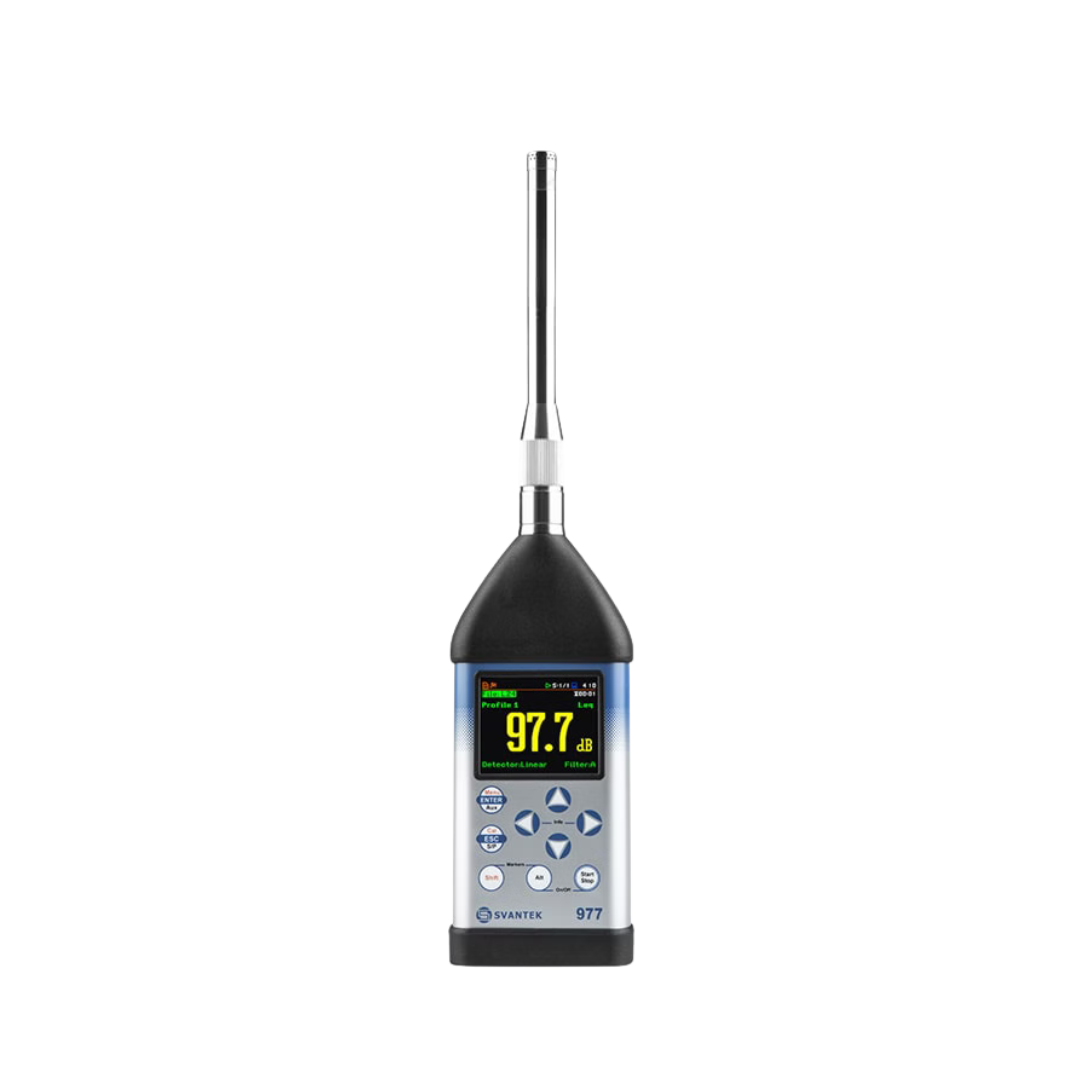
Advanced Class 1 sound and vibration analyzer for complex acoustic and environmental applications.
SVANTEK sound level meters support precise noise and acoustic measurements across occupational, environmental, and building applications.
Choose compliance-grade precision for routine surveys or regulatory measurements.
Suitable for occupational noise, environmental monitoring, and building acoustics.
Supports frequency analysis, RT60, and speech intelligibility testing.
Simplifies setup, measurement control, and on-site data review.
Designed to meet IEC, ISO, ANSI, and environmental noise regulations.
Enables detailed time-history recording and professional report generation.
A sound level meter (SLM) is a handheld instrument that measures sound pressure levels (SPL) in decibels (dB), responding to sound similarly to the human ear.
Sound level meters are used to measure and manage noise from workplaces, construction sites, traffic, industrial facilities, and public environments to support safety and environmental compliance.
Class 1 sound level meters offer higher precision and are used for environmental and compliance-grade measurements, while Class 2 meters are suited for general-purpose and occupational noise assessments.
A microphone converts sound into an electrical signal, which is processed using frequency weightings and time constants before displaying sound levels in decibels.
Leq represents the average sound energy over a specific time period, providing a single value that reflects fluctuating noise levels.
Calibration should be checked before and after each measurement session using an acoustic calibrator. Certified laboratory calibration is recommended every 12–24 months.
Attach an acoustic calibrator to the microphone, activate the reference tone (typically 94 dB or 114 dB at 1 kHz), and verify that the meter reading matches the reference level.
Sound level meters are tested and certified under IEC 61672 standards, which define performance requirements for Class 1 and Class 2 instruments.
Professional sound level meters typically measure from low ambient noise levels to high peak values, often exceeding 140 dB Peak, with frequency ranges covering audible sound and, in some models, ultrasonic frequencies.
Yes. Modern sound level meters support internal or removable memory for storing time histories, statistics, and measurement results for later analysis and reporting.
Many professional sound level meters offer Bluetooth® connectivity, allowing users to remotely control measurements and view results in real time via mobile applications.
Yes. Professional instruments are designed to operate across wide temperature and humidity ranges, making them suitable for industrial, construction, and environmental noise surveys.
Measurement data can be analysed using dedicated PC software for reporting, frequency analysis, and compliance documentation, with mobile apps available for on-site monitoring.
Please fill out the form below to get in touch.